




Arrow of Light Adventure: A Walk in the Woods
The Bald Cypress: A Tree That Depends on Its Whole Ecosystem
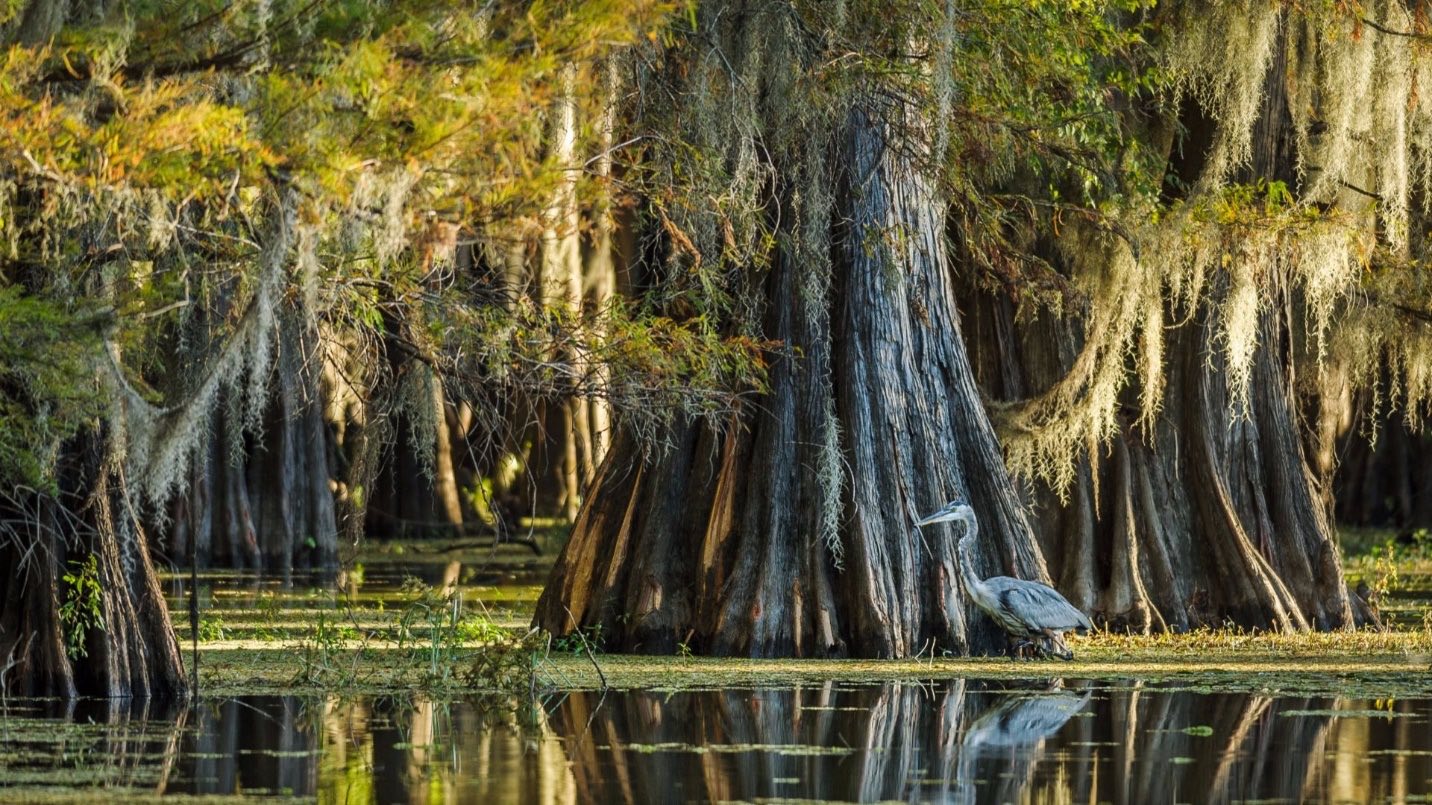
If you visit the swamps of South Florida, you may see trees standing in water with wide, strong trunks and strange-looking roots rising from the ground. These are bald cypress trees. They are one of the most important trees in the wetlands of South Florida, especially in Big Cypress National Preserve.
The bald cypress is an excellent example of an important idea in conservation: to protect a species, sometimes we need to protect the entire ecosystem where it lives.
A species is a group of living things that are alike and can reproduce with one another. An ecosystem is a community of living things (plants, animals, fungi, and microorganisms) together with the water, soil, air, and other nonliving parts of their environment.
The bald cypress has survived for thousands of years because it is specially adapted to its environment. But it is not alone. Many other species depend on the cypress, and the cypress depends on the conditions created by the ecosystem around it.
A Tree Adapted to Extremes
Bald cypress trees (Taxodium distichum) are native to the southeastern United States. Their natural range stretches from parts of the Mid-Atlantic states south through Florida and west along the Gulf Coast into Texas. They also grow inland along rivers and wetlands.
South Florida is an especially challenging place for a tree. During the rainy season, enormous amounts of water can cover the ground for months. During the dry season, much of that water disappears, and the soil can become much drier. South Florida also experiences powerful tropical storms and hurricanes.
Bald cypress trees have adaptations that help them survive these changing conditions. Their trunks and roots are strong enough to withstand wet, unstable soil and powerful winds. Their root systems spread through the ground and help anchor the trees. You may also notice strange, cone-shaped structures called cypress knees sticking up around the trees. Scientists have studied these structures for many years, although their exact purpose is still not completely understood.
The ability to survive both flooding and drying is especially important in Big Cypress. The ecosystem is not supposed to stay wet all the time or dry all the time. The natural cycle between wet and dry is part of what makes the ecosystem work.
How Does a Cypress Tree Make More Cypress Trees?
Bald cypress trees reproduce by producing seeds inside small, round cones. When the cones mature, they break apart and release their seeds. Some seeds fall onto the ground, while others fall into the water.
This is where the swamp itself helps the tree reproduce. During the rainy season, moving water can carry cypress seeds to new places. The seeds may travel downstream or across flooded areas until they reach a place where a new tree can grow.
But the seed needs the right conditions. A young cypress generally needs soil that is very wet but not deeply underwater. If the water is too deep for too long, the seedling may not survive. If the soil becomes too dry, it may also have trouble growing.
This means that the cypress depends on the natural movement of water. If people change the way water moves through the ecosystem by building roads, canals, levees, or other structures, it becomes harder for cypress trees to reproduce.
The tree's life cycle shows us something important: a species can be adapted to its environment but still depend on the entire ecosystem remaining healthy.
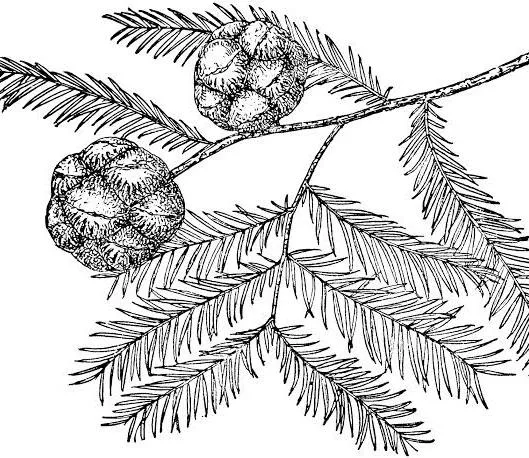
A Cypress Tree Is a Neighborhood
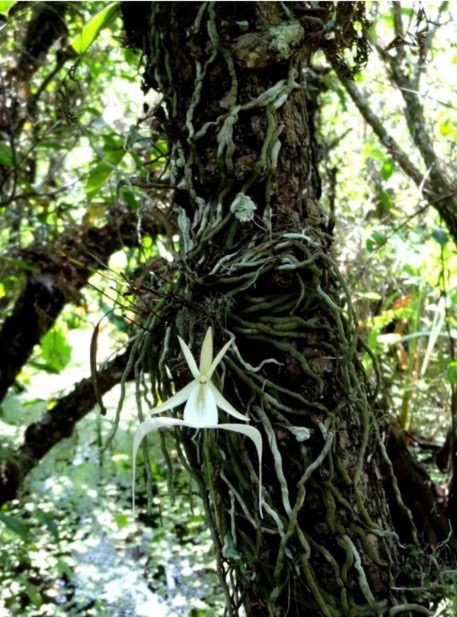
A large bald cypress tree may live for hundreds or even a thousand years. A mature specimen is much more than a tree. It is a host for many other species.
Look closely at a cypress tree and you may see air plants, also called bromeliads, growing on its branches. Orchids can grow there too. These plants are called epiphytes. An epiphyte grows on another plant to get support, but it does not take food from the plant it grows on. Air plants collect water and nutrients from rain, moisture, and tiny pieces of organic material that collect around them.
Cypress trees also provide places for birds to live and find food. Wading birds such as herons and egrets use wetland habitats to hunt. Other birds can nest or search for insects among the branches. Insects are part of this community too. They may feed on plants, pollinate flowers, or become food for birds and other animals.
Fish and other aquatic animals can find shelter among submerged roots and fallen trees. Mammals and reptiles use the wetland for food, water, and shelter.
The cypress is therefore connected to many other living things. The tree provides habitat. The habitat supports animals and other plants. Those species interact with one another and help the ecosystem function.
What Makes Big Cypress Special?
Big Cypress National Preserve is a huge protected area in southwestern Florida. It covers approximately 729,000 acres and is connected to the larger Everglades ecosystem.
The name "Big Cypress" can be a little misleading. The preserve is not simply one enormous forest of cypress trees. It contains many different habitats, including cypress swamps, hardwood forests, pine forests, prairies, and coastal areas.
Water connects these habitats. South Florida is extremely flat. Water moves slowly across the landscape, sometimes spreading out over a large area rather than flowing through a single river. This slow-moving water is extremely important to the Everglades and Big Cypress.
Big Cypress also has a special type of limestone landscape. The limestone underneath the region is full of small depressions and holes that affect how water collects and moves. This means that even a small difference in the height of the ground can create a different habitat. A low area may hold water for a long time and support cypress trees. A slightly higher area may dry out more quickly and support different plants.
The landscape works like a giant connected system.
Why Was Big Cypress Protected?
For many years, people changed South Florida's wetlands to make room for farms, roads, cities, and other development. Canals and other structures also changed the natural movement of water. By the 1960s, an especially large development project threatened the Big Cypress area: plans were being made to build a huge jetport in the swamp.
People who cared about the area began working to protect it. Scientists, conservationists, sportsmen, and members of the Seminole and Miccosukee communities all had reasons to want Big Cypress protected. Their efforts helped convince Congress to create Big Cypress National Preserve in 1974.
Did you know? Big Cypress was the first national preserve in the United States. A national preserve is different from a national park because it can allow some traditional activities, such as hunting and certain other uses, while still protecting the land and its ecosystems.
What Has Conservation Accomplished?
Protecting Big Cypress prevented a huge part of this wetland from being developed and helped preserve its natural water system. Today, Big Cypress protects hundreds of thousands of acres of wetlands and provides habitat for an enormous variety of plants and animals. It is home to species such as the American alligator, many kinds of wading birds, the Florida panther, orchids, air plants, and countless insects and other organisms.
Protecting the land also helps protect water. Big Cypress is an important part of the larger Everglades water system. Water moving through Big Cypress eventually contributes to the wetlands farther south and helps support the coastal ecosystems of South Florida.
Conservation does not mean that nothing in Big Cypress will ever change. Change is a natural part of an ecosystem. Hurricanes knock down trees. Floods move seeds. Droughts dry out wetlands. Fires change vegetation. Animals move from one place to another. The goal is to protect the natural processes that allow the ecosystem to recover and continue functioning.
The Lesson of the Bald Cypress
The bald cypress teaches us that nature is not a collection of separate species living independently. Instead, plants, animals, water, soil, weather, and climate are connected.
The bald cypress has evolved to survive South Florida's unusual conditions. It can live through months of flooding, periods of dryness, and powerful hurricanes. Its seeds use water to spread. Its branches provide homes for air plants and orchids. Its trunk, roots, and fallen wood provide habitat for animals.
But the cypress can only continue doing all of these things if the ecosystem around it remains healthy. That is why places like Big Cypress National Preserve are so important.
Conservation is not only about saving one tree, one bird, or one animal. It is about protecting the relationships between living things and the natural processes that allow them to survive together. When we protect the whole ecosystem, we give many species a chance to continue thriving, not just today, but for generations to come.